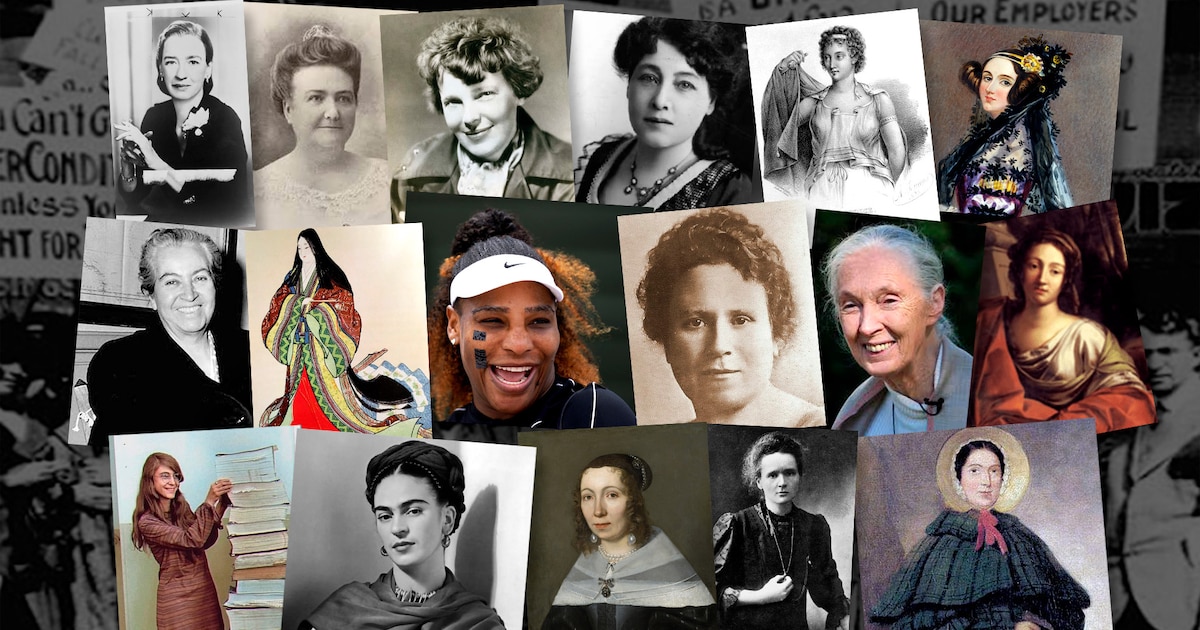
Throughout history, countless women have defied the odds, shattered expectations, and left indelible marks on the world, often against a backdrop of systemic challenges. From the captivating canvases of Surrealism to the infinite expanses of the cosmos, these trailblazing women who changed history harnessed their intellect and passion to push boundaries in both art and science. Their stories are not just tales of individual achievement, but powerful reminders of the enduring strength and ingenuity of Mujeres En La Historia, whose contributions have too often been overlooked or relegated to the margins.
This article delves into the lives of a select few, offering a glimpse into the diverse journeys of women who shaped our understanding of creativity and discovery. They exemplify the fierce intelligence and unwavering determination that characterize many of the unsung heroines who defined our world.
Valentine Hugo: Beyond the Muse in the Realm of Surrealism
The early 20th century in Paris was a crucible of artistic innovation, with the Surrealist movement taking center stage. While the scene was largely dominated by men, a few extraordinary women managed to transcend the traditional role of muses and carve out their own significant artistic identities. One such luminary was Valentine Hugo, a name that resonates with profound influence within the annals of Surrealism.
Early Life & Artistic Flourish
Born Valentine Marie Augustine Gross on March 16, 1887, in Boulogne-sur-Mer, France, Valentine inherited a deep appreciation for the arts from her father, Auguste Gross, a musician and theater enthusiast. This early exposure cultivated her innate talent, which became evident in her school days, where her drawings garnered awards and recognition. Following her father's passing, her mother nurtured her artistic inclinations, paving the way for her admission to the prestigious École des Beaux-Arts in Paris in 1907. It was there that she truly began to immerse herself in the vibrant, bohemian artistic life of the "City of Lights."
Her artistic sensibilities were further ignited in 1909 when she witnessed the captivating performances of Sergei Diaghilev's Ballets Russes at the Théâtre du Châtelet. The expressive gestures and dynamic forms of the dancers captivated her, inspiring a prolific series of drawings that captured their ethereal beauty and movement. This period marked the consolidation of her unique observational style and her growing engagement with the avant-garde.
A Surrealist Visionary: Defying Expectations
Valentine Hugo's journey into Surrealism was marked by her ability to move beyond being merely an inspiration for male artists. She engaged with the movement on her own terms, translating its dreamlike, subconscious aesthetic into compelling visual narratives. Her work often explored themes of identity, transformation, and the interplay between reality and illusion, employing a distinctive style characterized by delicate lines and unsettling juxtapositions.
Her participation was not just passive; she actively collaborated with leading surrealists and contributed to exhibitions, establishing herself as a respected artist in her own right. Her experience underscores a crucial aspect of women's historical roles in art: the persistent struggle to be seen as creators rather than subjects. Valentine Hugo's legacy stands as a testament to artistic resilience and a powerful example of Mujeres En La Historia who redefined their place in the cultural landscape.
From Stargazing to Scientific Breakthroughs: Ellen Dorrit Hoffleit and Margaret Oakley Dayhoff
While the art world flourished with new movements, other pioneering women were looking far beyond, towards the stars and the very building blocks of life. These women faced distinct challenges in the male-dominated fields of science, yet their passion and intellect drove them to monumental discoveries, forever changing our understanding of the universe and ourselves.
Ellen Dorrit Hoffleit: A Gaze Towards the Cosmos
Ellen Dorrit Hoffleit, born on March 12, 1907, in Alabama to a family of German descent, discovered her life's calling under a canopy of stars. As a young girl, observing a meteor shower with her mother ignited an unquenchable curiosity about the cosmos. It was a pivotal moment that cleared her path, turning her initial interest in art towards the rigorous pursuit of science – a choice fraught with difficulties for women in the early 20th century.
Despite pervasive societal attitudes that expected little in the way of professional careers for women, especially in fields like astronomy, Ellen persevered. From a young age, she encountered condescending remarks that lauded her brother's abilities while subtly diminishing her own. However, these biases only fueled her determination. By 1928, she graduated summa cum laude in Mathematics from Radcliffe College, a testament to her exceptional intellect and resilience. Her dedication led her to a distinguished career at Yale University, where she became a prominent figure in stellar astronomy, specializing in variable stars and proper motions. Her meticulous work on star catalogs, like the Yale Bright Star Catalogue, became indispensable resources for astronomers worldwide.
Ellen's story is a profound example of how early inspiration, coupled with unwavering resolve, can overcome societal barriers. Her journey illustrates the critical role of role models, even if they are just a mother pointing to the night sky, in shaping the futures of extraordinary Mujeres En La Historia.
Margaret Oakley Dayhoff: The Dawn of Bioinformatics
Another titan of science, Margaret Oakley Dayhoff, dedicated her brilliant mind to unraveling the secrets of life at a molecular level. Born on March 11, 1925, in Philadelphia, Margaret was a pioneer in the nascent field of bioinformatics, a discipline that merges biology with computer science. Her groundbreaking work laid the foundation for understanding protein evolution and sequence analysis, making her one of the most important physical chemists in history.
Margaret's academic journey was marked by consistent excellence. After her family moved to New York when she was ten, she excelled in high school and earned a scholarship to study mathematics at New York University, graduating magna cum laude. She then pursued her doctoral studies in quantum chemistry at Columbia University, where she began to integrate computational methods into her research. It was in her subsequent career, particularly at the National Biomedical Research Foundation, that she truly broke new ground, using early computers to compile and analyze vast amounts of biological data.
Despite her immense talent, Margaret faced skepticism and challenges, particularly when she re-entered the professional sphere as a mother of two bright daughters. The prevailing biases against women in science, especially those balancing family life, were significant obstacles. Yet, she not only achieved unparalleled scientific success but also actively championed the cause of other women in science. She understood that her success was not just personal but also a beacon for future generations of women in STEM. Her creation of the Atlas of Protein Sequence and Structure, the first comprehensive database of its kind, revolutionized molecular biology and remains a foundational text in bioinformatics. Her legacy is a powerful reminder that Mujeres En La Historia have not only advanced knowledge but also fought for greater inclusivity in scientific endeavors.
Lessons from Trailblazers: Inspiring Future Generations
The lives of Valentine Hugo, Ellen Dorrit Hoffleit, and Margaret Oakley Dayhoff offer invaluable insights into the multifaceted contributions of women across various disciplines. Their stories underscore several crucial themes:
- The Power of Early Inspiration: Whether it was a father's love for theater, a mother's shared wonder at a meteor shower, or an inherent curiosity nurtured by a supportive environment, early exposure to passions can ignite lifelong pursuits.
- Resilience Against Bias: Each woman faced skepticism, condescension, or outright discrimination simply because of their gender. Their ability to persevere, let their work speak for itself, and even advocate for others is a testament to their profound inner strength.
- Defining Your Own Role: Valentine Hugo moved beyond the "muse" archetype to become a creator. Ellen Hoffleit chose science over art despite societal pressures. Margaret Dayhoff balanced motherhood with pioneering scientific work. These women actively shaped their professional identities rather than passively accepting pre-assigned roles.
- The Interconnectedness of Innovation: From artistic expression to scientific discovery, the common thread is a deep curiosity and a willingness to challenge existing paradigms.
For aspiring young women today, their stories serve as a potent reminder that passion, persistence, and a belief in one's own capabilities are vital. Seek out mentors, build supportive networks, and never underestimate the impact of your unique perspective. The landscape for women in art and science has undeniably improved since their time, thanks in no small part to their groundbreaking efforts. However, the work of ensuring full equity and recognition continues.
Conclusion: Celebrating the Enduring Legacy of Mujeres En La Historia
The journeys of Valentine Hugo, Ellen Dorrit Hoffleit, and Margaret Oakley Dayhoff are just a few vibrant threads in the rich tapestry of influential women throughout history. They represent the countless Mujeres En La Historia whose intellect, creativity, and determination have propelled humanity forward in art, science, and every imaginable field. By shining a light on their achievements and the obstacles they overcame, we not only honor their individual legacies but also inspire future generations to pursue their dreams without limitation. Their stories remind us that true progress lies in recognizing and celebrating the contributions of all, ensuring that no talent goes uncelebrated, and every voice is heard in the grand narrative of human advancement.